

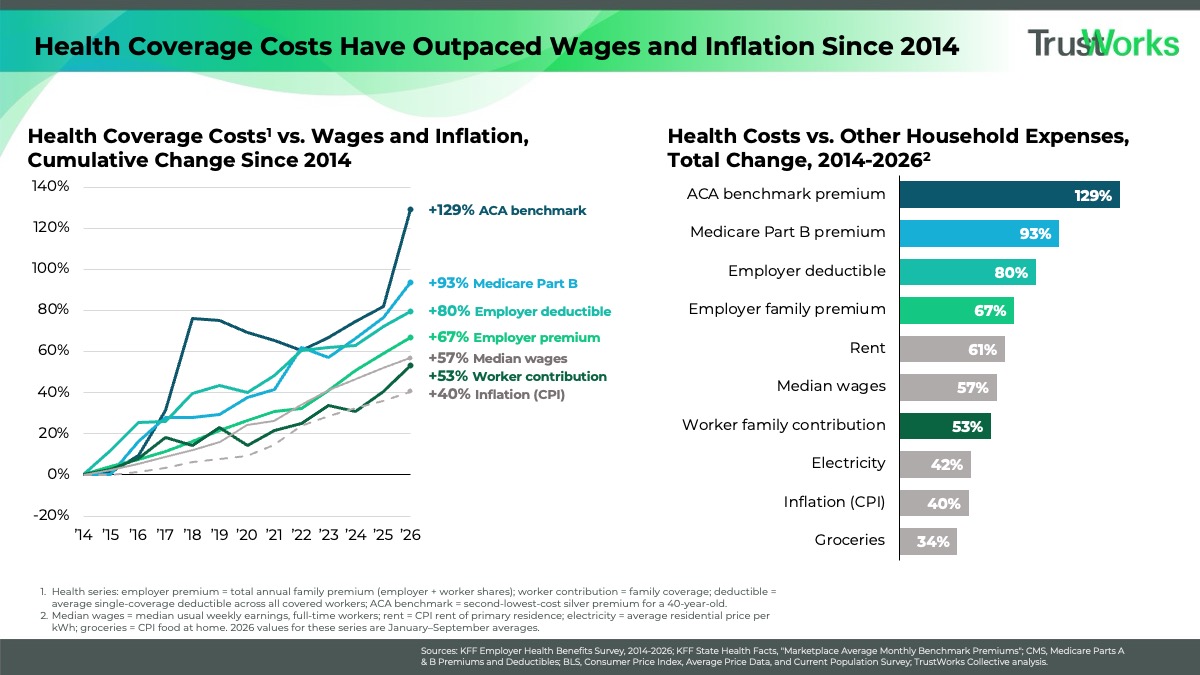
Every fall brings a fresh round of headlines about rising insurance premiums, and this year is no exception: benchmark ACA premiums are increasing 13 percent for 2027 after a 26 percent jump in 2026, and premiums for stand-alone Part D drug plans could jump 50 percent. But these single-year increases may undersell the cumulative effect of how persistently healthcare costs have outpaced household income and other expenses. Since 2014, the sticker price of an ACA benchmark plan has risen 129 percent, Medicare Part B premiums 93 percent, and the average employer deductible 80 percent. Over the same period, median wages grew 57 percent and overall inflation 40 percent. Healthcare premiums and deductibles also grew faster than household essentials like rent (61 percent), electricity (42 percent), and groceries (34 percent).
If Congress gets serious about addressing affordability, it may want to start with healthcare, arguably the average American household’s biggest concern. Addressing it requires going beyond insurance coverage because households and employers cannot keep up with the underlying costs of care. Extending subsidies may provide necessary relief, but subsidies redistribute the financial burden without necessarily addressing its underlying drivers. Until policymakers confront those drivers, affordability will remain an increasingly expensive problem to manage.
From newsletter: Bluesday 2026